
Red light versus sunligh

Updated: Mar 19
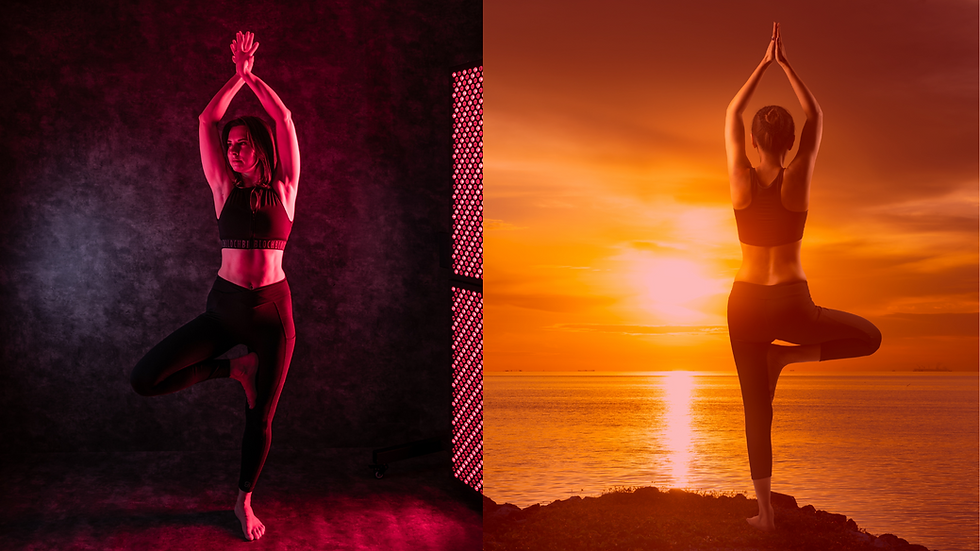
Introduction
In the vast spectrum of health and wellness, few elements are as essential and universally acknowledged as sunlight. Since ancient times, the sun has been valued not only for its warmth and illumination but also for its role in supporting general well-being. Sunlight influences our circadian rhythms and can contribute to overall vitality.
However, in modern life, marked by urbanization and indoor lifestyles, many people spend a large portion of their time indoors, limiting their exposure to natural light. Red light therapy offers a controlled and targeted approach to harnessing specific wavelengths of light, providing a complementary option for supporting wellness routines. While it does not replace the unique benefits of sunlight, red light therapy can be a convenient addition to daily wellness practices.
Wavelengths
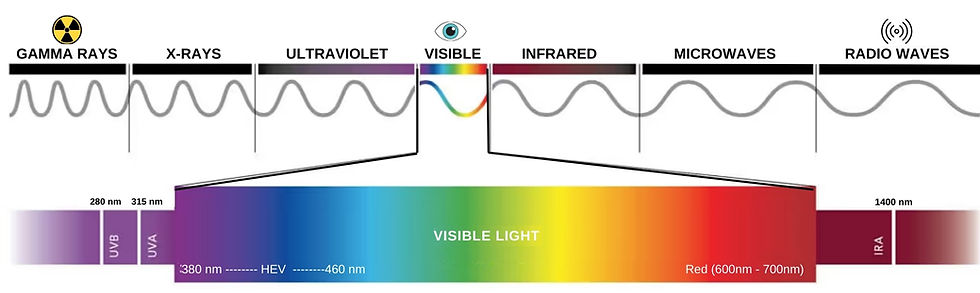
Red light therapy: Primarily uses red and near-infrared wavelengths, typically ranging from 600 to 1000 nanometers (nm).
Sunlight: A broad spectrum that includes visible light, ultraviolet (UV) light, and infrared light, spanning 400–700 nm for visible light and extending beyond for UV and infrared.
Source
Red light therapy: Devices use light-emitting diodes (LEDs) or lasers to emit specific wavelengths of red and near-infrared light.
Sunlight: Naturally emitted by the sun, encompassing a wide spectrum of wavelengths.
UV Exposure
Red light therapy: Does not emit UV light, so there is no associated risk of UV damage.
Sunlight: Contains UV radiation, which can have both beneficial effects (e.g., supporting vitamin D production) and potential risks (e.g., sunburn, premature skin aging).
Intensity and Duration
Red light therapy: Sessions are typically a few minutes to around 30 minutes, depending on personal preference and device guidelines.
Sunlight: Exposure varies by time of day, season, location, and weather. Excessive exposure, particularly during peak hours, can increase the risk of sunburn and skin damage.
Availability
Red light therapy: Can be used at any time, regardless of weather or climate.
Sunlight: Access depends on environmental factors, such as season, latitude, and weather conditions.
Well-Being Effects
Red light therapy: Often used as part of wellness routines to support skin care, relaxation, and a sense of refreshment after physical activity.
Sunlight: Contributes to vitamin D synthesis, supports circadian rhythm regulation, and can enhance mood and overall well-being when enjoyed safely.
Safety Precautions
Red light therapy: Generally considered safe when used as directed, with minimal risk of adverse effects. Avoid direct exposure to the eyes.
Sunlight: Precautions include wearing protective clothing, sunscreen, sunglasses, and limiting direct exposure during peak UV hours.
Clinical Context
Red light therapy: Often incorporated in wellness or beauty settings to support skin care routines and relaxation.
Sunlight: In controlled settings, light exposure can be used for supportive wellness practices, such as improving mood or supporting daily rhythms.
Summary Table
Feature | Red Light Therapy | Sunlight |
Wavelength | Red & NIR (600–1000 nm) | Broad spectrum: visible, UV, infrared |
Source | LEDs or lasers | Naturally emitted by the sun |
UV Exposure | None | Contains UV; potential benefits & risks |
Typical Use | Wellness, skin care, relaxation | Vitamin D synthesis, circadian support, mood |
Availability | Any time, indoor or outdoor | Dependent on weather, season, location |
Safety | Minimal risk; avoid direct eye exposure | Requires sun protection to minimize skin/eye damage |
Context | Wellness routines | Wellness and daily life exposure; mood & energy support |


Comments